 Apparel Boxes
 Corrugated Boxes
 Display Boxes
 Hemp Boxes
 Pillow Boxes
 Seasonal Boxes
 Bakery Boxes
 Cigarette Boxes
 Food Boxes
 Jewellry Boxes
 Rigid Boxes
 Toy Boxes
 Cardboard Boxes
 Candle Boxes
 Gift Boxes
 Kraft Boxes
 Retail Boxes
 Vape Boxes
 CBD Boxes
 Die Cut Boxes
 Hair Extension Boxes
 Mailer Boxes
 Soap Boxes
 Window Boxes
 Cosmetic Boxes
 Labels Stickers
 Mylar Bags
 Insert Boxes
 Gable Boxes
 Foldable Boxes
 Tuck Boxes
 Sleeve Boxes



How to Choose the Right Custom Apparel Boxes for Your Clothing Brand
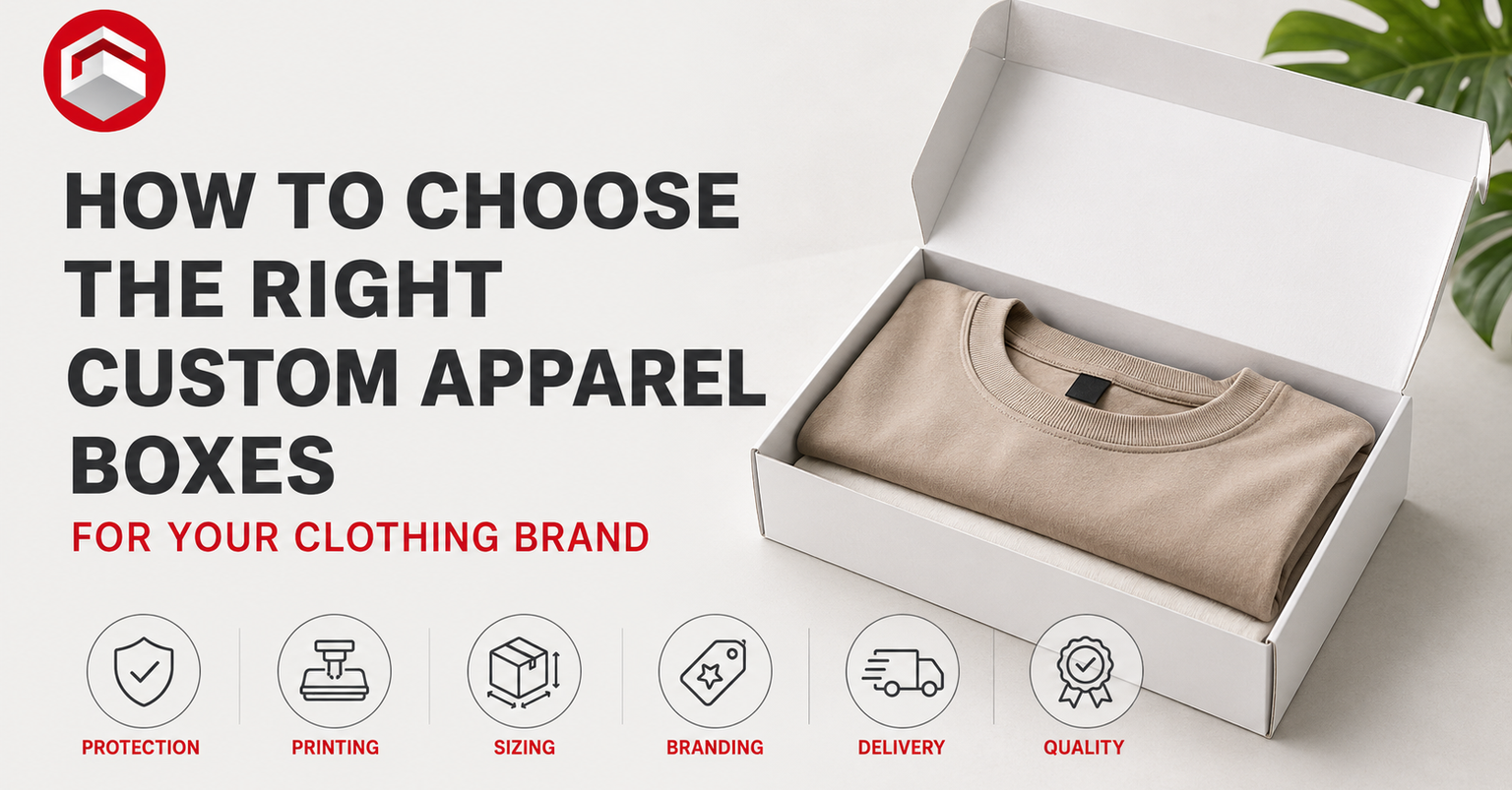
Packaging plays a role beyond simply containing clothing. It protects your clothes, enhances your brand’s visibility, supports your brand identity, and helps create customers’ first impression.
Choosing the right packaging depends on the garment; lightweight apparel requires simple boxes, while luxury or structured wear requires sturdy boxes for a premium feel, protection, and support.
Custom Apparel Boxes offer manageable storage, customer requirements fulfilment and safe delivery across the UK. Packaging finalisation factors include material, structure, printing style, and logo positioning. Your order quantity and sustainability goals also play a role in the decision.
This guide explains each factor in practical terms. It will help you compare packaging options and select boxes that work for your clothing brand.
What Are Custom Apparel Boxes?
Custom apparel boxes are packaging boxes designed specifically for your brand according to the garments’ dimensions, presentation, and your brand’s business needs.
Unlike standard cartons, these boxes are also available made to order with the desired size, shape, and finishes. From tailored sizes to branded printing and practical box styles, we provide durable materials, branded printing, and versatile styles to protect clothing while creating a memorable unboxing experience.
We believe your packaging should complement the garment rather than simply contain it.
Why Are Apparel Boxes Important for Clothing Brands?
Clothing reaches customers through different channels. It leaves a boutique, travels through a fulfilment centre, or passes through several delivery stages before reaching its destination.
Suitable Custom Apparel Packaging helps keep garments organised during these stages. A properly sized box reduces unnecessary movement and provides a cleaner presentation when the package is opened.
Packaging also gives customers an immediate visual connection with your brand. Consistent typography, colours, graphics, and structural choices make individual orders feel part of the same brand experience.
For online retailers, this becomes especially useful because the packaging is the customer’s first physical interaction with your business.
Key Benefits of Custom Apparel Boxes
- Better product protection: A sturdy structure prevents garments from crushing and moving during handling.
- Stronger brand presentation: Custom printing gives garments an appealing feel and provides customers with an unforgettable experience.
- Improved customer experience: A carefully designed package makes opening and handling the garment memorable and more convenient.
- UK market suitability: Packaging is tailored accordingly to fulfil the presentation, branding, and delivery needs of clothing brands in the UK.
- Better product organisation: Tailored dimensions keep clothes properly positioned inside the box.
- Consistent brand identity: Matching packaging across product ranges creates a more recognisable presentation.
- Shipping suitability: Suitable packaging makes garment delivery easier.
How to Choose the Right Apparel Box Materials
Apparel box materials depend on an understanding of the product and business demand and its delivery environment.
Corrugated Cardboard
Used for adding protection during shipping, it is beneficial when clothing needs protection during delivery or long-distance transit.
Kraft Board
Kraft boards are used for a natural appearance and for simple presentation. It works well with minimalist branding.
Paperboard
Paperboard is preferred for lighter clothing products and folding cartons. Its smooth surface helps in printing and detailed branding.
Rigid Board
Rigid boards are preferred for solid structure requirements, for premium clothes packaging, or for gifting purposes.
The choice of material depends on weight, shipping requirements, appearance, budget, and the level of protection required.
Choose the Right Apparel Box Sizes
Getting appropriate Apparel Box Sizes is essential. A box of larger length allows garments to move excessively and use more space. whereas small size box compresses clothes and affects presentation.
Decide packaging dimensions after proper measuring and then consider inserts, wrapping sheets, labels, or other components that will occupy internal space.
For example:
- T-shirts: Usually suit compact boxes that accommodate a neatly folded garment.
- Shirts: Require slightly more internal height, especially when folded with presentation in mind.
- Hoodies: Need greater depth because of their thicker fabric.
- Trousers: Often benefit from longer internal dimensions depending on the folding method.
- Dresses: require larger formats to prevent excessive creasing.
- Luxury garments: require extra space for presentation materials or protective inserts.
Always test a physical sample before approving a large production run.
What Are the Best Apparel Box Styles?
The Best Apparel Box Styles depend on the garment, business, budget, and desired presentation.
Tuck-End Boxes
These folding cartons use tuck flaps to close the package. They are suitable for lightweight apparel and space-efficient packaging.
Mailer Boxes
Mailer boxes are designed with integrated flaps and are useful for online orders. Their structure supports convenient packing without requiring a separate outer shipping carton in suitable applications.
Sleeve and Tray Boxes
A sleeve and tray create a layered opening experience. It works well when presentation matters as much as basic product protection.
Rigid Boxes
Rigid construction provides a sturdy feel and best suits luxury apparel, gifting, and higher-value garments.
Magnetic Closure Boxes
Magnetic closures create a distinctive opening experience. These boxes are appropriate for premium fashion collections and special presentation packs.
Folding Cartons
Folding cartons are lighter in weight and functionally practical and best fit for larger products.
How to Design Effective Custom Apparel Packaging
Good packaging design should communicate your brand without making the box visually crowded.
Your logo should remain recognisable, while colours and typography should match your existing identity. Product information is included where it provides genuine value to the customer.
Custom Printed Apparel Boxes include exterior artwork, interior printing, patterns, messages, care information, or other brand elements.
Think about the complete opening experience. A clean exterior followed by a well-designed interior creates a stronger impression than covering every available surface with graphics.
Focus on the customer’s unboxing experience. A clean exterior with a carefully designed interior makes customers feel more appealing rather than adding excessive or vibrant colors.
When Do Custom Apparel Boxes Wholesale Orders Make Sense?
Custom Apparel Boxes Wholesale will be practical when your clothing business has some predictable packaging demand. Bulk orders help to maintain consistency over multiple product lines. However, ordering more boxes is not automatically the right decision.
Consider your:
- Monthly packaging requirements
- Available storage space
- Seasonal demand
- Product launch schedule
- Cash flow
- Expected changes to branding
- Number of garment styles
A growing clothing brand should avoid ordering excessive packaging if it expects to change its logo, dimensions, or product range soon.
Clothing Packaging Boxes for Different Apparel Businesses
Different businesses need different packaging priorities.
Luxury labels prioritise rigid construction, refined finishes, and a stronger unboxing experience.
Boutiques benefit from boxes that look attractive in-store and remain easy to store.
Sportswear brands need durable packaging that handles frequent fulfilment without excessive weight.
Designers and clothing manufacturers require several box sizes to accommodate different collections.
Therefore, Clothing Packaging Boxes should be selected around actual product and fulfilment requirements rather than a generic packaging formula.
Checklist for Choosing the Right Box
Before placing an order, check these factors
1- Dimensions Take a measure of the garment after folding.
2- Protection Identifies the level of strength required.
3- Material Choose a board based on function and presentation.
4- Box style Match the structure to your sales channel.
5- Printing Decide which branding elements are necessary.
6- Brand positioning Align the packaging with your market.
7- Shipping method Consider courier handling and delivery.
8- Order quantity Match production volume with actual demand.
9- Budget Balance appearance, performance, and cost.
10- Sustainability goals Avoid unnecessary material and check recyclability requirements.
This checklist is helpful in preventing mistakes before production starts.
FAQs
1-What are Custom Apparel Boxes used for?
They are designed to package clothing while providing protection and a branded presentation. Dimensions can be customised to garment demand.
2-What box size should I choose for clothing?
Measure the folded garment first. Then allow enough room for tissue, inserts, and easy packing without leaving excessive space.
3-Which apparel box style is suitable for e-commerce?
Mailer boxes are practical for online orders because their integrated structure supports straightforward packing. The final choice depends on product weight and delivery requirements.
4-Can Custom Apparel Packaging be personalised with my clothing brand logo?
Yes, Custom Apparel Packaging supports branding elements such as logos, colours, typography, patterns, interior artwork, and other design features. The available options depend on the printing process and box material.
5-How do UK clothing brands make more responsible packaging choices?
Start by reducing unnecessary material and choosing packaging that is appropriate for the product. Businesses should also review current UK packaging guidance and their specific obligations.
Conclusion
Choosing the right Custom Apparel Boxes is not just about attractive design. Packaging selection must consider the garments’ dimensions, required protection, material, box structure, branding, delivery method, budget, and customer expectations.
Start with the product itself. Measure it carefully, select an appropriate material, and compare box styles based on how your customers receive the order.
Then consider printing, storage, order volumes, and sustainability. A well-planned package supports both practical fulfilment and a consistent fashion brand experience.