 Apparel Boxes
 Corrugated Boxes
 Display Boxes
 Hemp Boxes
 Pillow Boxes
 Seasonal Boxes
 Bakery Boxes
 Cigarette Boxes
 Food Boxes
 Jewellry Boxes
 Rigid Boxes
 Toy Boxes
 Cardboard Boxes
 Candle Boxes
 Gift Boxes
 Kraft Boxes
 Retail Boxes
 Vape Boxes
 CBD Boxes
 Die Cut Boxes
 Hair Extension Boxes
 Mailer Boxes
 Soap Boxes
 Window Boxes
 Cosmetic Boxes
 Labels Stickers
 Mylar Bags
 Insert Boxes
 Gable Boxes
 Foldable Boxes
 Tuck Boxes
 Sleeve Boxes



Does Packaging Affect Coffee Freshness?
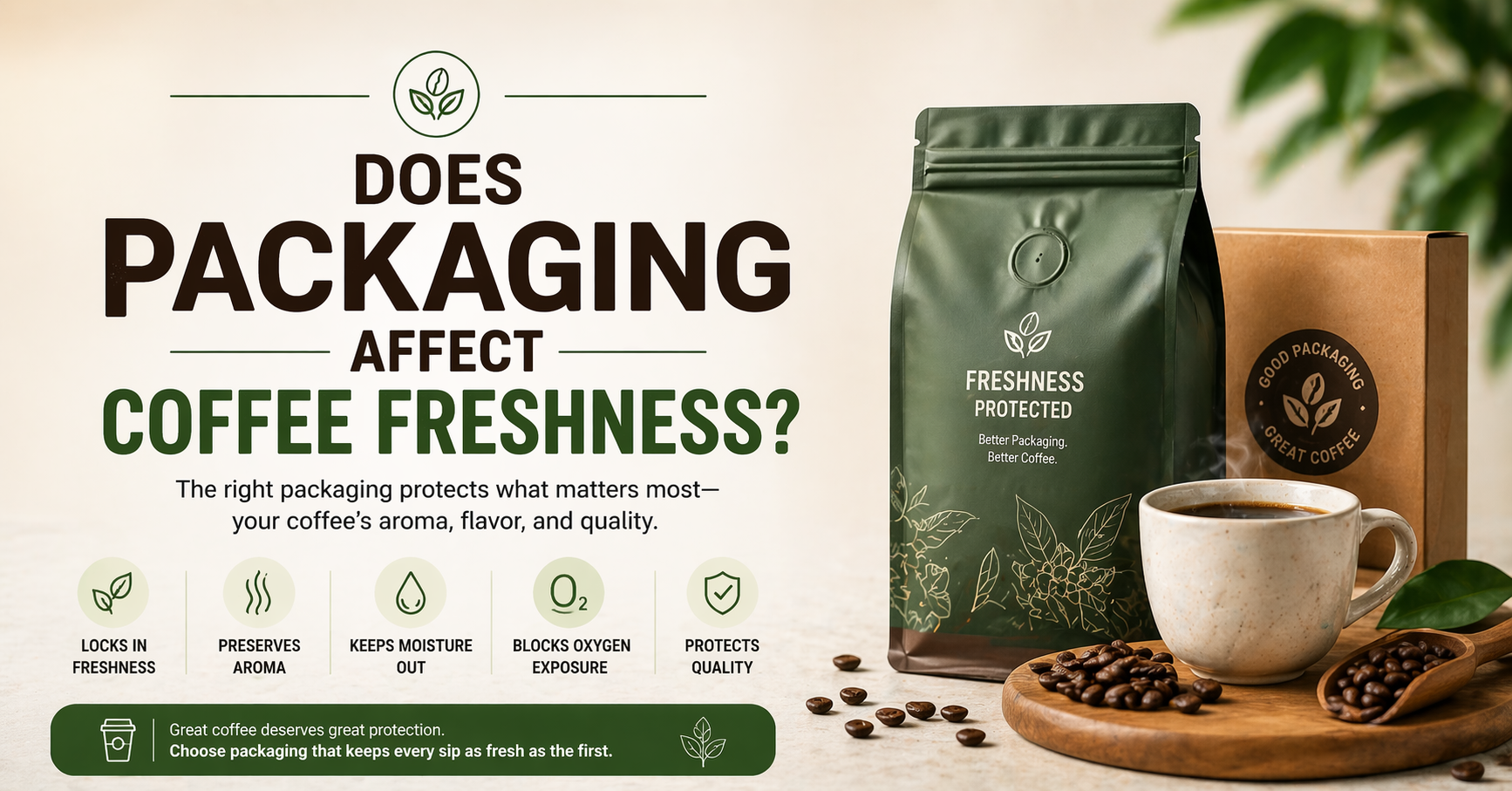
Coffee freshness is the key factor that determines its flavour, aroma, taste and overall quality. Freshly roasted coffee contains oil and aromatic compounds that we love. And over time, it’s exposed to oxygen, light, and heat, cases these compounds to break done, which leads to stale and bitter coffee.
Maintaining its freshness it’s important for every coffee brand for customer satisfaction, repeat purchases, and brand reputation; that’s where the best coffee packaging does its job. The right packaging acts as a protective barrier that shields coffee from environmental factors and makes every cup enjoyable.
Coffee can quickly lose its quality if these external elements are not properly controlled. Read the blog to know why coffee goes stale. By knowing this, you will appreciate the importance of choosing the right packaging.
Key Factors That Cause Coffee To Lose Freshness
Coffee is a product that naturally begins to degrade with the movement it undergoes after being roasted. Several environmental factors accelerate this process, which are moisture, oxidation, heat, and light. Here is the detail of these key culprits:
Oxidation
One of the main reasons is oxidation. It means when oxygen reacts with natural oils and aromatic compounds, they break down the delicate molecules that are responsible for coffee’s rich flavour. As a result, coffee loses its vibrant taste and becomes stale. This is why air-tight packaging, such as vacuum-seal bags and foil-lined bags, is important to slow down the oxidation process.
Moisture
As we know that coffee is highly absorbent, and even a small amount of humidity can cause staling, clumping, and mould growth, particularly in ground coffee, which has more surface area when exposed.
Light
Exposure to light, whether natural or artificial, has a negative impact on coffee flavour and quality. Especially, UV rays break down the delicate oils and aromatic compounds. Thus, it comes in opaque and foil-lined packaging that blocks harmful light and maintains both flavour and aroma for a longer period.
Temperature Fluctuations
Changes in surrounding temperature have a significant impact on coffee freshness. Heat speeds up the chemical reaction in beans that breaks down flavour compounds, as well as a cooler environment, and leads to stale beans, even when sealed in a bag. Therefore, its packaging often includes degassing valves combined with temperature control, so that beans remain fresh for a longer period.
Now that you have understood the importance of packaging, which is critical in preserving the quality. Let’s move towards its different types that are available and how each one can contribute to coffee freshness.
Types Of Coffee Packaging
Common types include flexible pouches like stand-up, side-gusset, flat-bottom bags, rigid food packaging such as tins, glass jars, as well as single-serve pods.
Flexible Pouches
These bags are made from multi-layered materials like foil, mylar, and laminated plastic that provide excellent protection against oxygen and light. They are lightweight, adaptable and highly popular in both retail and e-commerce settings. They do not take up too much space during storage and are highly customisable with branding, custom designs, and product information for a confident purchase decision.
Rigid Packaging
Some of its examples are cans, tins, and hard plastic containers. These containers are commonly used for premium and gift coffee products. Although they are heavier than pouches, this packaging prevents crushing and maintains product integrity during shipping. Many brands also prefer it for subscription box services as they offer high-end aesthetics and a sense of quality.
Single-Serve Pods
They are specialised coffee packaging that have grown in popularity in recent years because of their convenience and consistency. Each pod is pre-measured and highly effective at reducing exposure to oxygen, moisture, and light. They can be sustainable using materials like recyclable and compostable rather than plastic.
Packaging Features And Design
When it comes to coffee shelf life, certain technologies offer excellent results both in preservation and overall potency. This includes:
One-Way Degassing Valve
It is a small, one-way vent on coffee bags that allows carbon dioxide to escape without letting oxygen enter. After freshly roasting, this function releases the trapped gas that is naturally produced, which can lead to expansion or even bursting. This technology is vital for brands and customers, as it keeps coffee aromatic and flavorful for a longer period.
Heat-Seal Top
It refers to a method that fuses thermoplastic material with heat and pressure to create a secure, air-tight seal. When the bags are heat-sealed, they close off any pathways for oxygen, moisture, and contaminants. It also strengthens the bag’s structure, preventing accidental openings during shipping and handling. They are often done with machinery like impulse and constant heat sealers. Key variable for a successful seal includes the temperature of 160 to 200 degrees Celsius, with a time of 2 seconds.
Appropriate Sizing
Packaging coffee in the right size bag or container does matter for an effective solution. When it is stored in an oversized enclosure, the excess air space inside exposes the beans or grounds to oxygen and speeds up staling. Customise an appropriate size from a trusted packaging supplier, BoxesGen, to extend life, preserve aroma and consistent taste from the first cup to the last.
Best Practice For Coffee Storage
Even with custom packaging for coffee, how it’s stored after purchase plays an essential role in keeping it fresh. Remember always to store coffee in an opaque, cool, dry place away from heat sources like direct sunlight and stoves. Keeping it in the refrigerator can cause condensation and moisture damage. It’s best to store coffee at room temperature.
An important tip for people who do not consume the entire coffee bag in one go is to divide coffee into resealable bags, as they can limit its exposure to air.
Wrap Up!
At this point, you must have a clear answer that yes, packaging plays a powerful role in preserving coffee flavour, aroma, and overall quality. Whether it’s a flexible pouch, a bag with a degassing valve, or an airtight container, each type of packaging protects coffee at different stages of its journey. However, packaging alone is not enough. How it is stored, whether in retail or at home, also matters in determining how long it will last.